Disability Health Equity Research Network (DHERN)

About DHERN

The Disability Health Equity Research Network (DHERN) supports disability health equity research, connects researchers and trainees, and fosters the inclusion of disabled people in these efforts.

DHERN Leadership Team

White man with brown hair and a neat beard smiles openly. He wears black frame glasses with a vibrant purple right lens and clear left lens and a black blazer over a pastel green collared shirt. He is against an even professional gray background.

Scott D. Landes, PhD

DHERN Co-Founder
Professor, Sociology Department, Syracuse University
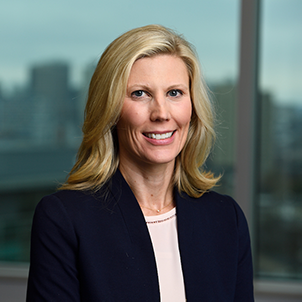
White woman with golden blonde hair smiles confidently. She wears a navy blazer and pearl necklace over a white blouse. She stands in front of a large window overlooking the Baltimore city skyline.

Bonnielin K. Swenor, PhD, MPH

DHERN Co-Founder
Director, Johns Hopkins Disability Health Research Center
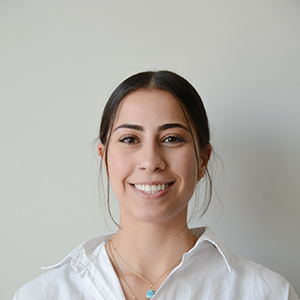
Layla Shahbander

Research Coordinator, Johns Hopkins Disability Health Research Center

DHERN Advisory Board
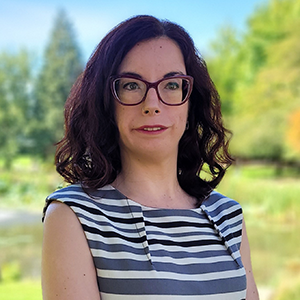
White woman with dark shoulder length hair, looking straight ahead. she wears glasses and a stripped blue, white and black top. She is against a background with trees and a blue sky.

Kathleen Bogart, PhD

Professor of Psychology, Oregon State University
Co-Founder of Disability Advocacy Research Network (DARN)

Brown woman with dark hair pulled back in a pony tail, smiling. She is sitting in a wheel chair in a purple shirt with white polka dots. A black service dog has his two front legs across her lap, the dogs head comes up to her shoulder. She and the dog are against a background of green trees and grass.

Anjali J. Forber-Pratt, PhD

Director of Research, American Association on Health and Disability

Indian man with glasses wearing a white medical jacket with a blue tie, standing with his arms crossed against a professional gray background.

Mihir Kakara, MBBS, MSHP

Assistant Professor of Neurology, NYU Grossman School of Medicine

Funding

DHERN activities have been funded by:

Connect with Us

Email: DHERN@jh.edu

Center for Aging and Policy Studies (CAPS)

The Center for Aging and Policy Studies (CAPS) is a three-university consortium in Upstate New York with Syracuse University, Cornell University, and University at Albany. CAPS is a catalyst for innovative, high impact, policy-relevant research. It has a long record of grant funding from the National Institute on Aging (NIA) as part of NIA’s Demography and Economics of Aging Program. In addition, CAPS affiliates receive grant funding from NIA and other agencies to support their research aimed at improving the health, wellbeing, and independence of midlife and older adults.

Research at CAPS addresses some of today’s most pressing issues facing midlife and older adults and the families that care for them, with a focus on the policies and places that shape those issues. Our research is organized around two signature and three cross-cutting research themes that address those increasingly pressing issues and align with NIA priority areas. The two signature themes of CAPS are health and well-being and family and intergenerational supports; the three cross-cutting themes are the role of policy, importance of place, and circumstances of specific populations. CAPS affiliates have particularly deep expertise on the health of persons with disabilities and rural and socioeconomically disadvantaged populations.


Subscribe to receive CAPS weekly announcements


CAPS EVENTS

CAPS Seminar: Frontiers of Research on Family Relationships...
Apr 17, 2026 at 12:00 PM

ASI/CAPS Seminar: Jenna Wells
Apr 24, 2026 at 12:00 PM

2026 CAPS-CPR Conference
Jun 08, 2026 - Jun 09, 2026 at 12:00 AM

View Event Archive


Featured Publication

Merril Silverstein, Woosang Hwang, Joonsik Yoon, Wencheng Zhang, Jeung Hyun Kim, Kent Jason Cheng, & Maria Teresa Brown. 2026. “Transmission of Religiosity Across Generations: Historical, Cohort, and Relational Dynamics.” Sociology of Religion. https://doi.org/10.1093/socrel/sraf029

View All Featured Publications


Lerner Center/CAPS Briefs

How Do State Labor Policies Impact Disability for Latino Adults in the U.S.?
Marc A. Garcia, Blakelee Kemp, and Erin Bisesti

Pandemic Mask Mandates and Closures Were Linked to Increased Gun Violence
Douglas A. Wolf, Emily W. Wiemers, Iliya Gutin, Jennifer Karas Montez, and Shannon M. Monnat

Latin American Refugees to the U.S. Experience More Discrimination than Refugees from other Regions
Sobia Mushtaq and Janet M. Wilmoth

Is AI Replacing Human Mental Health Professionals?
Michiko Ueda

How Does County Educational Composition Affect Mortality?
Heeyoung Lee and Tse-Chuan Yang

View More


Policy, Place, and Population Health Lab

The P3H Lab is a vibrant hub of interdisciplinary research and training on how places and their policies shape population health. A central focus of the lab is investigating how U.S. state and local environments affect people’s health and life expectancy. The P3H Lab is co-directed by Dr. Jennifer Karas Montez, Professor of Sociology and Gerald B. Cramer Faculty Scholar in Aging Studies, and Dr. Shannon Monnat, Professor of Sociology and Lerner Chair in Public Health Promotion and Population Health.

Check out this article on the P3H Lab titled, Research Insights on Population Health Inspire Policy Change.

Contact Us

For questions about research conducted in the P3H Lab, for information about training opportunities, or media inquiries, contact us at jmontez@syr.edu or 315-443-2703


Spring 2026 Lab Meetings

Schedule of Events

No Events

View Event Archive


Research conducted at the P3H Lab receives support from:

National Institute on Aging (grant #1R01AG055481-01)
Andrew Carnegie Foundation
USDA NIFA AFRI (grant #2018-68006-27640)
National Institute of Justice (grant #2017-IJ-CX-0017)
Gerald B. Cramer Faculty Scholar of Aging Fund, Aging Studies Institute, Syracuse University
Lerner Center for Public Health Promotion, Syracuse University
Maxwell School of Citizenship and Public Affairs, Syracuse University
Robert Wood Johnson Foundation

Research

The substantive research interests of faculty affiliates define ASI’s thematic areas. ASI’s research falls under the following five themes:

Age-Based Public Policy and WellBeing addresses various issues related to federal, state, and local policy including social security entitlement and reform, Medicare and Medicaid coverage and financing, and services provided through the aging network with Older American Act funds.

Population Aging considers the causes and consequences of a changing population age structure in the United States and worldwide, with a particular focus on its implications for work, the timing of retirement, savings and expenditures; disparities by race and ethnicity, class, and gender; and heterogeneity within and between groups such as disabled adults, veterans, and LGBT elders.

Health and Functioning addresses a wide range of topics related to health across the life course including the development of specific conditions such as Alzheimer’s disease, arthritis, and cancer as well as variation in cognitive functioning, hearing loss, obesity,  functional limitations, and disability.

Family Dynamics, Care Work, and Intergenerational Support examines the nature of older adults’ family relationships and the flow of support across generations including caregiving and living arrangements within families as well as the political economy of intergenerational transfers through public entitlement and assistance programs.

Aging Design, Engineering, and Technology includes design for medical devices and personal monitoring, universal design for private and public spaces including long-term care facilities, technology use among older adults, and innovative delivery methods for treating age-related diseases.

Institute faculty members often approach these thematic areas from a comparative and cross-cultural perspective.

For more information on faculty research, see the following.

Aging Matters: Syracuse University’s Aging Studies Institute is a leader in producing aging-related research, education, and outreach. 

Explorations in Aging: SU Aging Studies Institute takes a multidisciplinary approach to the ever-evolving issues confronting older citizens.

Family Ties: A major international conference, hosted by Syracuse University’s Aging Studies Institute, explored how aging citizens fit in and contribute – here and around the globe.

Improving with Age: The study of gerontology at Syracuse, including research done in Maxwell’s Center for Policy Research, has gotten a boost with a new Aging Studies Institute and a named professorship.